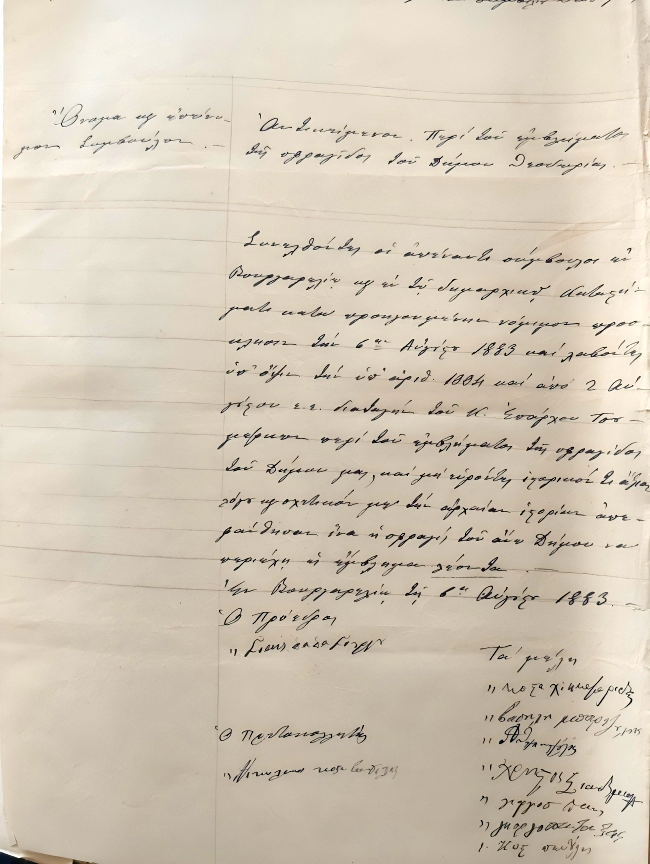
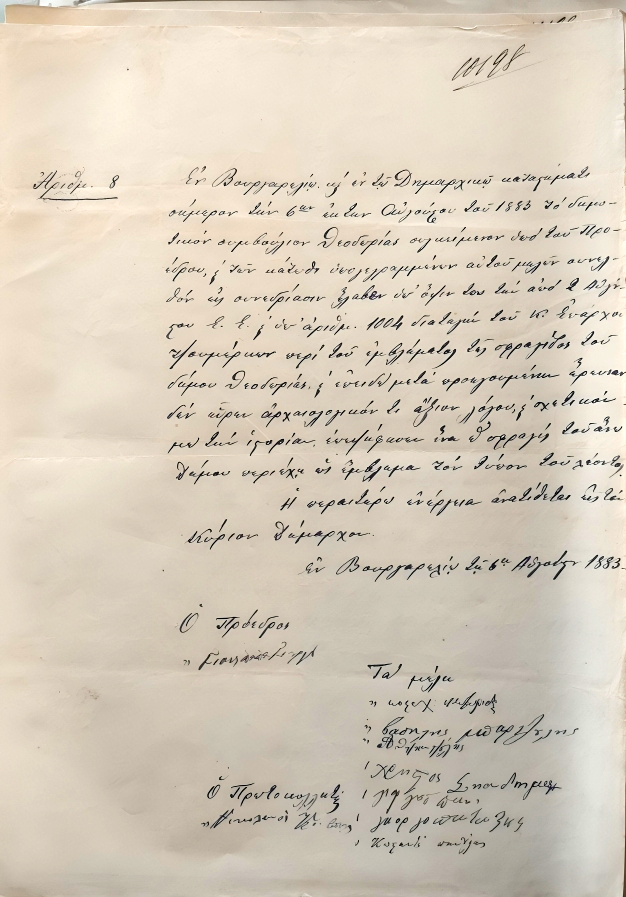
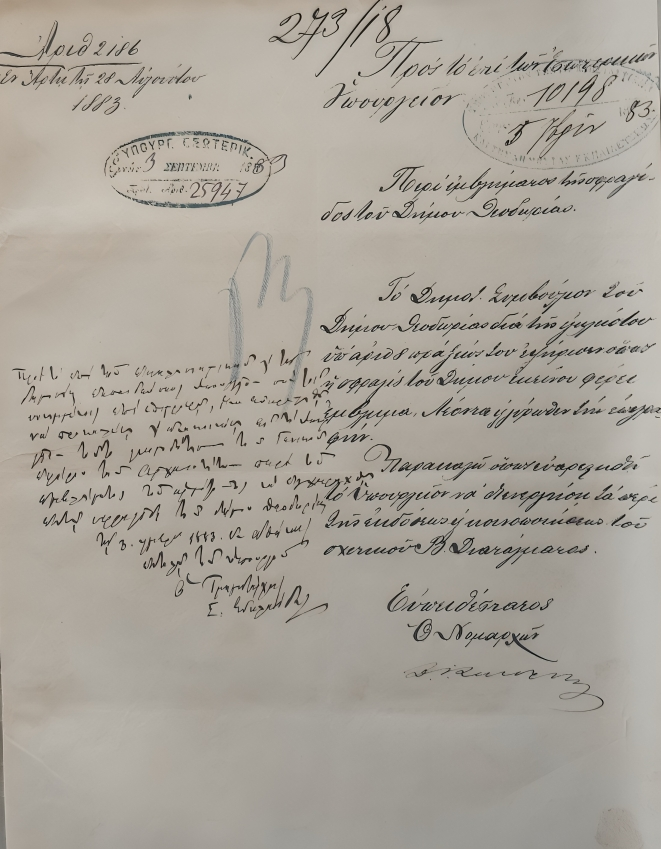
Τρία έγγραφα που αφορούν το έμβλημα της σφραγίδας του νεοσύστατου Δήμου Θεοδωρίας τον Αύγουστο του 1883. (Πηγή : ΓΑΚ, Κ.Υ.)
Έγγραφο 1 – Σύγκληση Δημοτικού Συμβουλίου Δήμου Θεοδωρίας με θέμα το “Όνομα και την εισήγηση Συμβόλου”. Προτείνεται “…το έμβλημα Λέοντα και γύρωθεν την επιγραφήν” Δήμος Θεοδωρίας.
Έγγραφο 3 – Έγγραφο του Νομάρχη Άρτης προς το Υπουργείο Εσωτερικών περί του συμβόλου της Σφραγίδας του Δήμου Θεοδωρίας με ημερομηνία 28 Αυγούστου 1883. Προτείνεται “…το έμβλημα Λέοντα και γύρωθεν την επιγραφήν” Δήμος Θεοδωρίας. (Πηγή : ΓΑΚ, Κ.Υ.)
Οι εκβολές του Βωβού στον Αμβρακικό κόλπο από ψηλά, που εκβάλλει κοντά στην Κοπραινα”…..Σε αυτό το σημείο ο Άραχθος και ο Βωβός και πιο δυτικά ο Λούρος, έχουν φτιάξει ένα σκηνικό γεμάτο από λιμνοθάλασσες, παραποτάμους, δάση και μικρά νησιά”. (Πηγή : Η ΕΛΛΑΔΑ ΑΠΟ ΨΗΛΑ, Εφημερίδα ΤΑ ΝΕΑ, Σεπτέμβριος 2008).
Δυο εύζωνοι από τα Θεοδώριανα στο Μικρασιατικό μέτωπο το 1922. Αριστερά ο Φώτιος Γιάννη Σιώκης (1896-1972), που έκανε πέντε χρόνια εύζωνας. Αιχμαλωτίστηκε από τους Τούρκους και κατόρθωσε να δραπετεύσει. Μαζί με τα άλλα στρατιωτικά του καθήκοντα έκανε και τον κουρέα. Ο δεύτερος Θεοδωριανίτης μας είναι άγνωστος. (Η φωτογραφία είναι από το οικογενειακό αρχείο του κ. Ανδρέα Ρίζου)
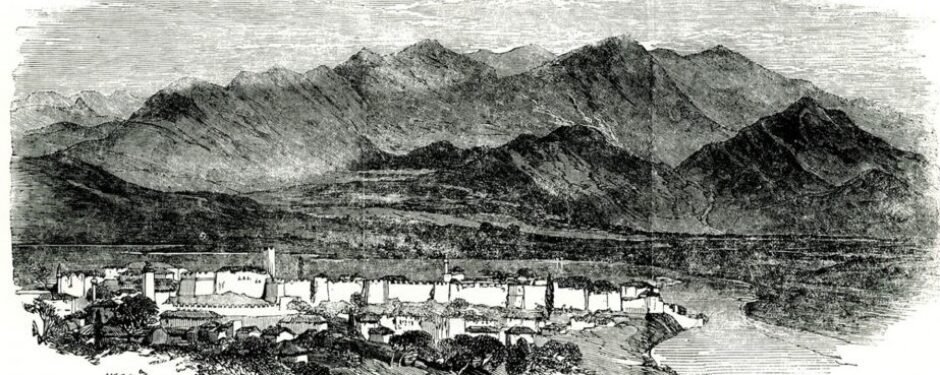
Η φωτογραφία του Ν. Πανταζόπουλου έχει τον τίτλο “Ελληνικόν Στρατόπεδον”. Αν κρίνουμε από τα βουνά και το ποτάμι στο βάθος καθώς και τον τρούλο από το τζαμί στα αριστερά, που πιθανόν πρόκειται για το τζαμί Φειζουλάχ, η φωτογραφία είναι μάλλον από την πόλη της Άρτας κατά την διάρκεια του πολέμου του 1897. (Πηγή : Αρχείο ΑΛΚΗ Ξ. ΞΑΝΘΑΚΗ, ΙΣΤΟΡΙΑ ΤΗΣ ΕΛΛΗΝΙΚΗΣ ΦΩΤΟΓΡΑΦΙΑΣ 1839-1970, ΕΚΔΟΣΕΙΣ ΠΑΠΥΡΟΣ ΑΘΗΝΑ, 2008 )
“……Του υπέδειξα αυτό που είχα δει. Παρακολούθησε για λίγα λεπτά και μετά, αφού με ευχαρίστησε, κάλπασε προς το Επιτελείο. Πριν περάσει μισή ώρα, είδα γύρω στους 500 ή 600 Ευζώνους να έχουν ριχτεί στο κακοτράχαλο έδαφος ακόμα πιο δεξιά, έτσι η προέλαση των Τούρκων προς αυτή την κατεύθυνση ελέγχθηκε. Γνωρίζουμε τώρα από στοιχεία από την άλλη πλευρά ότι αυτοί οι Εύζωνοι σχεδόν πέτυχαν να ανατρέψουν ολόκληρη την τουρκική θέση, και αν είχαμε ρίξει τον Τούρκο πίσω πέρα από τα Γιάννενα, θα είχα κάθε λόγο να είμαι περήφανος.
Μετά από αυτό, σχεδόν κάθε κίνηση σταμάτησε και οι δύο πλευρές αντάλλασσαν μολύβι η μία με την άλλη για να δουν ποια θα ενδώσει πρώτη. Αλλά καμμιά από τις δύο δεν συγκινήθηκε: οι άνδρες δεν υποχωρούσαν όταν τους πυροβολούσαν. Μόνο η προέλαση θα τους κλόνιζε. Ώρα με την ώρα από τις έντεκα μέχρι το σκοτάδι, παρακολουθούσα εκείνη τη φρικτή και άσκοπη σφαγή. Η βροχή έπεφτε σαν χείμαρρος, όλος ο ουρανός γεμάτος χαμηλά σύννεφα κρεμόταν από πάνω μας, όλες οι κορυφές των βουνών ήταν κρυμμένες, και κατά μήκος των κορυφών όλων των κορυφογραμμών ο καπνός των τουφεκιών και του πυροβολικού κρεμόταν κι αυτός ακίνητος, σαν κρόσσια λεπτής λευκής ομίχλης.
Αμέσως μετά το μεσημέρι, και πάλι στις πέντε η ώρα, η ροή του μουσκέτου διπλασιάστηκε σαν να επρόκειτο να γίνει επίθεση με τη ξιφολόγχη. Ήταν στη δεύτερη έναρξη που ο συνταγματάρχης Γιαννόπουλος, ο διοικητής του 6ου, σκοτώθηκε από μια σφαίρα στο στόμα του καθώς οδηγούσε άφοβα μπροστά, μέχρι τα εχθρικά τουφέκια, επευφημώντας τους άνδρες του την ώρα της επίθεσης. Αν η προέλαση είχε πετύχει το στόχο της, γνωρίζουμε τώρα ότι κάθε Τούρκος θα είχε φύγει. Αλλά αμέσως μετά, εμφανίστηκαν μεγάλες ενισχύσεις Nizam ή τακτικών στρατευμάτων, και δεν είχαμε ξανά τέτοια ευκαιρία.
Κάποιο άλλο θέαμα ήταν να παρακολουθούμε την επιτυχία των οβίδων που έριχναν τα μεγάλα μας όπλα από την Άρτα και το Πέτα. Θα μπορούσε κανείς να τις ακούσει να σφυρίζουν από πολύ πίσω. Μετά ούρλιαζαν πάνω από τα κεφάλια μας και έφταναν πολύ μακριά, με έναν σιγανό θόρυβο, προς τα εμπρός. Μετά θα ερχόταν ο μεγάλος παφλασμός από την πτώση τους στο σκοτεινό χώμα. Μερικές φορές ο τοίχος ενός χαρακώματος άνοιγε, και μπορούσαμε να δούμε τους Τούρκους να βουίζουν σαν ταραγμένα μυρμήγκια και να τον χτίζουν ξανά. Όλη την ώρα οι Τούρκοι αξιωματικοί περπατούσαν πάνω κάτω. Μερικές φορές ξεπρόβαλαν για μια στιγμή στο στηθαίο, ίσως για να ενθαρρύνουν τους άντρες τους, ίσως για να κρίνουν καλύτερα την απόσταση. Στην πιο μακρινή κορυφογραμμή εκατοντάδες Τούρκοι μαζεύονταν, και έτρεχαν βιαστικά πέρα δώθε, δεν μπορούσε κανείς να καταλάβει γιατί. Μερικές φορές προσπαθούσα να παρακολουθήσω τις κινήσεις ενός ανθρώπου, αλλά ξαφνικά εξαφανιζόταν ή μπερδευόταν με άλλους, και καθώς σιγά-σιγά σκοτείνιαζε, το μόνο που φαινόταν ήταν πορτοκαλί φλόγες σε σειρά, που ξεπηδούσαν μέσα από την ομίχλη. Όλη την ώρα η βροχή χτυπούσε στο έδαφος και ο βρυχηθμός του θανάτου δεν σταματούσε ποτέ. Μέσα στην πυκνή καταχνιά η μάχη συνεχιζόταν, και όλη την ώρα οι διάσπαρτες σειρές από φορεία συνέχιζαν να προχωρούν έρποντας προς την πόλη, κουβαλώντας κάποιον που βογκούσε και ούρλιαζε, ή κάποιον που έμοιαζε εντελώς ακίνητος.
Μερικά περιστατικά πιο κοντά μου έχουν μείνει στο μυαλό μου, καθώς και μερικά λόγια από συνομιλίες, που ήρθαν σαν όνειρο και χάθηκαν ξανά, χωρίς να δύναμαι να πω πότε. Για πολλή ώρα ένας ηλικιωμένος αγρότης με έναν λερωμένο, λευκό μανδύα καθόταν δίπλα μου και κοίταζε τον καπνό μπροστά του, ακουμπώντας το πηγούνι του στην γκλίτσα του. Δύο από τους γιους του ήταν στη γραμμή βολής εκεί στον λόφο. Εξαφανίστηκε, και λίγο μετά, νομίζω τη στιγμή της επίθεσης στις πέντε, πέρασε ένας αξιωματικός με κάποιον ξένο δημοσιογράφο, «Είναι γοητευτικό, έτσι δεν είναι, κύριε, γοητευτικό!» φώναξε ο δημοσιογράφος, και με τη συνήθη ευγένεια του Έλληνα, ο αξιωματικός απέφυγε να τον φτύσει στο πρόσωπο. Για περίπου μισή ώρα περπάτησα προς τα πίσω κατά μήκος των λόφων για να δω αν ερχόταν ενίσχυση. Στο καταφύγιο των ταγμάτων βρήκα παρέες από αγρότες και κατοίκους της πόλης, που βγήκαν να δουν τη μάχη ή επειδή είχαν συγγενείς εκεί. Θυμάμαι ένα μικρό πλασματάκι, περίπου έξι χρονών, να τρέχει απελπισμένο από ομάδα σε ομάδα, φωνάζοντας, “Πατέρα, πατέρα, πού είσαι;” ενώ τα δάκρυα έμοιαζαν να τρέχουν από το μικρό του σώμα. Κάποιος του έδωσε ένα πορτοκάλι, ελπίζοντας να το κάνει να ξεχάσει τον πατέρα του για λίγο, αλλά δεν ξέρω αν τα κατάφερε, γιατί το έχασα από τα μάτια μου μέσα στο πλήθος.
Επιτέλους το έλεος της νύχτας έβαλε τέλος στη μέρα και νιώθοντας σαν τον «Άνθρωπο του Εγκλήματος όταν επιτέλους το πρωσικό κανόνι ησύχασε στο Σεντάν», ξάπλωσα σε μια άδεια σκηνή και προσπάθησα να κοιμηθώ. Αντιλήφθηκα ότι, καθώς η προέλαση ήταν αδύνατη, έπρεπε να υπάρξει υποχώρηση. Και έτσι έγινε, γιατί ακριβώς μετά το ξημέρωμα του Σαββάτου 15 Μαΐου βρήκα τους Έλληνες να αποσύρονται από τις προχωρημένες θέσεις στους λόφους και να συγκεντρώνονται γύρω από τις τουρκικές πυροβολαρχίες στο Ιμαρέτ που σκαπανείς τις ενίσχυαν με οχυρώσεις. Αν οι Τούρκοι είχαν επιτεθεί, θα μπορούσαν να μας είχαν κυνηγήσει στην πόλη και πιθανώς να βγαίναμε από αυτήν, αλλά πάντα αργούν να ακολουθήσουν κάποιο πλεονέκτημα. Μπορούσα να τους δω να κλέβουν σταδιακά στις θέσεις που είχαμε εγκαταλείψει και να τριγυρνούν σε ομάδες αναζητώντας τους νεκρούς. Που και που ο εμφανής ενθουσιασμός μας έλεγε ότι είχαν βρει κάποια πτώματα και τσακώνονταν για τα ρούχα καθώς τα έσκιζαν. Από καιρό σε καιρό ένα κανόνι στην Άρτα έστελνε μια οβίδα καταμεσής, και ήταν ευχάριστο να τους βλέπουμε να τρέχουν μακριά παραβλέποντας την απαίσια δουλειά τους. Αλλά για όλο το υπόλοιπο της ημέρας συνέχισαν να παρατάσσουν όλο το στρατό τους σε μεγάλους αριθμούς, σαλπίζοντας και φωνάζοντας, αν και δεν τολμούσαν να προχωρήσουν….”. (Πηγή : SCENES IN THE THIRTY DAYS WAR BETWEEN GREECE & TURKEY – 1897, BY HENRY W. NEVINSON, London, J. M. DENT & CO. 29 and 30 BEDFORD STREET, W.C., 1898 – Μετάφραση Α. Καρρά)
Στη φωτογραφία “Έλληνες στρατιώτες στα χαρακώματα στον πόλεμο του 1897”. (Πηγή : “NΟTES OF A WAR CORRESPODENT”, Davis, Richard Harding, New York, C. Scribner’s Sons, 1910)
“Τα αχυροσκέπαστα τουρλωτά καλύβια των Καραδημαίων τσελιγκάδων από τα Πράμαντα στο Τσπι Αστακού, στέκουν όρθια για να θυμίζουν την οδύσσεια των ποιμένωνστα χειμαδιά του Ξηρόμερου, Μάης 1991”. (Πηγή : : Η ΑΝΟΔΟΣ ΤΩΝ ΝΟΜΑΔΩΝ ΤΩΝ ΠΡΑΜΑΝΤΩΝ ΣΤΙΣ ΒΟΥΝΟΚΟΡΦΕΣ ΤΗΣ ΠΙΝΔΟΥ, Ν. Καρατζένης, Ιωάννινα, 2009)
“Οι νομάδες του ανατολικού Τζουμέρκου, Βουργαρελιώτες, Αθαμανιώτες και Θοδωριανίτες για να φτάσουν στη Άρτα έκαναν τους παρακάτω σταθμούς : Αι Λιάς Βουλγαρελίου, Παλιόχανο (Ραδιτσικό και Αντρία Μαρία), Ψηλά Δέντρα (Καλεντίνη), Τρύπες (Πλατανόρεμα) ή Κοσμίτσιανα, Κομποτέικο.
Πολλοί νομάδες από τα χωριά αυτά το φθινόπωρο πήγαιναν στα χειμαδιά από το Γάβρογο, ακολουθώντας μια πορεία δύσκολη μέσα από βουνά με χιόνια, κλεψιές και ζουλάπια. Οι σταθμοί της πορείας αυτής ήταν : Κέδρος Αθαμανίου, Κρανούλα Μεσούντας, Αγία Παρασκευή Ελάτης, Στρογγυλόκαμπος Καταβόθρας, Δυο Ελάτια (Σουμερού), Παλιοκούλια Σκουληκαριάς, Πρατίνα Παντιόπουλου, Διασέλια Παντιόπουλου, Λιβάδια Παντιόπουλου, Χάνι Λαγού (ανάμεσα Εμπεσό και Φλωριάδα), Τούρκα Ανοιξιάτικου, Αγία Τριάδα Ανοιξιάτικου, Παυλιανή, Σαμάρι ή Σαραλίτικο και φτάσιμο στο λιβάδι στην περιοχή Κατούνας….”. (Πηγή : ΟΙ ΝΟΜΑΔΕΣ ΚΤΗΝΟΤΡΟΦΟΙ ΤΩΝ ΤΖΟΥΜΕΡΚΩΝ, Ν. Καρατζένης, Άρτα, 1991)
Στη φωτογραφία “Ο λαμπαδόκορμος γεροτσέλιγκας Γιώργος Κ. Πλούμπης από το Βουργαρέλι στη στρούγκα της Πλέκουζας αγναντεύει τις πεντακόσιες γαλάρες του κοπαδιού του, που έζωσαν το πλάι…” (Η φωτογραφία είναι του Βασίλη Γκανιάτσα από το ίδιο βιβλίο).
“Οι Τζουμερκιώτες ακολουθούσαν και τρίτο δρόμο πολλές φορές για την Άρτα, μέσα από τα Ξηροβούνια αυτή τη φορά. Το δρόμο αυτό τον ακολουθούσαν όσοι δεν είχαν βία να φτάσουν στα χειμαδιά, αλλά ήθελαν να χασομερήσουν στη στράτα είτε γιατί δεν είχαν ξεχινοπωριό, είτε γιατί επιθυμούσαν ν’ απαντήσουν το λιβάδι καμιά βδομάδα να βγάλει περισσότερο χορτάρι. Το δρόμο αυτό έπαιρναν κι όσοι κτηνοτρόφοι ξεχείμαζαν στην περιοχή της Βόνιτσας. Μετά τον πόλεμο έπαψαν να πηγαίνουν στα χειμαδιά τους απ’ το Μακρυνόρο, αλλά από την Πρέβεζα.
Οι σταθμοί αυτής της πορείας ήταν : μεγάλη κοδέλα Πλάκας, Βαλτσιώρα (Πηγάδια Καλεντζίου), Σκλίβανη (Μπριάσκοβο), Πέντε Πηγάδια Κλεισούρας, Παλιά Μουλιανά (Γοργόμυλος), Κουμπζιάδες (Αμμότοπος), Γραμμενίτσα κλπ. Οι νομάδες που τραβούσαν για το Βονιτσιάνικο συνέχιζαν την πορεία τους για Πρέβεζα. Οι υπόλοιποι σταθμοί τους ήταν : Στριβίνα (Καμπή), Καντζάς (Στεφάνη), Παλιασβεσταριά Λούρου, Φλάμπουρα, Σμυρτούλα, Μώλος Πρέβεζας, Μπούνατ (Άκτιο), Σκράπεια και τέλος φτάσιμο. Το δρομολόγιο αυτό ήταν ξεκούραστο γι’ ανθρώπους και ζωντανά γιατί τα κονάκια ήταν μικρά, τα πρόβατα περνούσαν μέσα από λιβάδια και βοσκούσαν, αλλά τα Ξηροβούνια είχαν πολλά τσιμπούρια και τα γιδοπρόβατα υπόφεραν…… Μαρτυρικό ήταν και το φόρτωμα γιδιών, προβατιών και χοντρικών στο καράβι στην Πρέβεζα όλη τη νύχτα για να τα «ρίξουν» απέναντι….”. (Πηγή : ΟΙ ΝΟΜΑΔΕΣ ΚΤΗΝΟΤΡΟΦΟΙ ΤΩΝ ΤΖΟΥΜΕΡΚΩΝ, Ν. Καρατζένης, Άρτα, 1991)
Στη φωτογραφία “Στο δρόμο για τα χειμαδιά”, η Ευστρατία Χ. Θεοδώρου από το Βαθύπεδο με τα παιδιά της Αικατερίνη και Λάμπρο, το φθινόπωρο του 1958 στη Στριβίνα. Τα χαράρια (σακιά) φορτωμένα στα χοντρικά, οι κότες πανωσάμαρα κι ο κολοβός για συντροφιά… (Η φωτογραφία είναι από το αρχείο του Γεώργιου Γ. Καράλη, όπως δημοσιεύτηκε στο ίδιο βιβλίο)
Προεκλογική συγκέντρωση του Κων/νου Καραμανλή στο Μονοπλιό εν όψει εθνικών εκλογών. Η φωτογραφία δεν έχει ημερομηνία, είναι όμως σίγουρα πριν το 1963, που ήταν και οι τελευταίες εκλογές που έλαβε μέρος ο Κ. Καραμανλής πριν τη δικτατορία. Στο βάθος διακρίνεται η εκκλησία της Παναγίας Κασσωπίτρας. (Πηγή : Ευώνυμος Οικολογική Βιβλιοθήκη)
Δεκαετία 1950. Με φόντο το μοναστήρι στο Θεοτοκιό. Δεξιά ο Χαρίλαος Χουλιάρας, επίτροπος του Ναού του Αγίου Νικολάου. (Φωτο από αρχείο Γιάννη Χουλιάρα)
Χρησιμοποιούμε cookies για την σωστή λειτουργία του ιστότοπου, καθώς και για βελτίωση των υπηρεσιών μας προς εσάς. Με τη χρήση αυτή της ιστοσελίδας, αποδέχεστε την Πολιτική Απορρήτου μας.
This website uses cookies to improve your experience while you navigate through the website. Out of these, the cookies that are categorized as necessary are stored on your browser as they are essential for the working of basic functionalities of the website. We also use third-party cookies that help us analyze and understand how you use this website. These cookies will be stored in your browser only with your consent. You also have the option to opt-out of these cookies. But opting out of some of these cookies may affect your browsing experience.
Necessary cookies are absolutely essential for the website to function properly. These cookies ensure basic functionalities and security features of the website, anonymously.
Cookie
Duration
Description
cookielawinfo-checkbox-analytics
11 months
This cookie is set by GDPR Cookie Consent plugin. The cookie is used to store the user consent for the cookies in the category "Analytics".
cookielawinfo-checkbox-functional
11 months
The cookie is set by GDPR cookie consent to record the user consent for the cookies in the category "Functional".
cookielawinfo-checkbox-necessary
11 months
This cookie is set by GDPR Cookie Consent plugin. The cookies is used to store the user consent for the cookies in the category "Necessary".
cookielawinfo-checkbox-others
11 months
This cookie is set by GDPR Cookie Consent plugin. The cookie is used to store the user consent for the cookies in the category "Other.
cookielawinfo-checkbox-performance
11 months
This cookie is set by GDPR Cookie Consent plugin. The cookie is used to store the user consent for the cookies in the category "Performance".
viewed_cookie_policy
11 months
The cookie is set by the GDPR Cookie Consent plugin and is used to store whether or not user has consented to the use of cookies. It does not store any personal data.
Functional cookies help to perform certain functionalities like sharing the content of the website on social media platforms, collect feedbacks, and other third-party features.
Performance cookies are used to understand and analyze the key performance indexes of the website which helps in delivering a better user experience for the visitors.
Analytical cookies are used to understand how visitors interact with the website. These cookies help provide information on metrics the number of visitors, bounce rate, traffic source, etc.
Advertisement cookies are used to provide visitors with relevant ads and marketing campaigns. These cookies track visitors across websites and collect information to provide customized ads.